
Marcia' Leadership Q And As: Why People Resist Change?
/

Q. Why People Resist Change ?
A. For decades, leaders have relied on a single word to mobilize organizations: change. Change initiatives. Change programs. Change management. Change readiness.
Yet few leaders pause to ask a more consequential question: What does the word “change” trigger for the people expected to carry it out?
For many employees, change does not signal opportunity or progress. It signals risk, loss, exposure, uncertainty. When leaders speak about change without understanding its human impact, they unintentionally activate fear. And fear, once introduced into a system, quietly erodes people, productivity, and profits long before leaders see the damage in financial results.
Great leaders recognize this pattern and pivot. They stop pushing change and instead invite people to work together to improve the systems they work within every day. Invite people to embrace improvement.
Fear Is Not a Soft Issue. It Is a Business Risk.
Fear in organizations is often dismissed as emotional noise, something to be managed through communication plans, engagement surveys, or resilience training. Fear is a systemic condition that directly affects thinking, judgment, and performance.
When fear is present, predictable things happen:
• Thinking narrows from problem-solving to self-protection
• Learning slows because mistakes feel unsafe
• Information is filtered or withheld
• Decision quality deteriorates
• Effort becomes cautious rather than committed
This is how fear erodes productivity. It does not fail loudly. It fails quietly through rework, delays, disengagement, and missed opportunities. Profits decline not because people don’t care, but because fear makes caring risky.
What Fear Looks Like Inside Organizations
Fear rarely announces itself directly. Leaders often mislabel it as resistance, lack of accountability, or poor attitude.
Employees are afraid of losing their jobs, their relevance, or their credibility. They fear being evaluated by unclear or shifting criteria. They fear speaking up and being punished, ignored, or sidelined. They fear decisions being made behind closed doors.
Increasingly, they fear technology. Now fear is escalating as AI is being introduced without any explanation of its impact on their work.
Leaders hear the symptoms but miss the signal. What looks like resistance and dis-engagement is often rational self-protection in an environment that feels unsafe.
Why “Change” Triggers Fear
From an employee’s perspective, the word “change” often carries unspoken messages:
• Decisions have been made and are not transparent
• Expectations may shift without warning
• Experience may no longer matter
• Mistakes will be punished
Even well-intended change efforts can provoke fear when leaders emphasize speed, compliance, or messaging. Instead understand how people experience the system. When change is done to people rather than with them, fear fills the gap.
Leaders Pivot: From Change to Improve
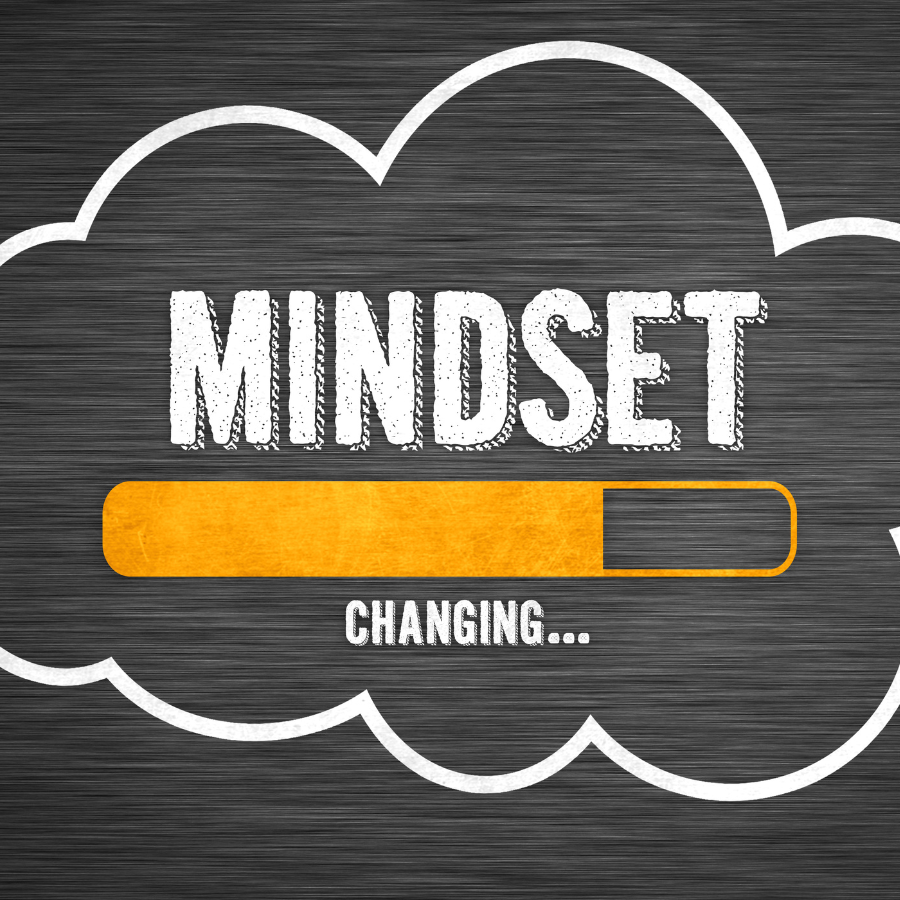
Great leaders make a deliberate pivot in language. They stop focusing on change and “change management.” Instead, they invite people to Improve the work and results Together.
This transformation in language, the pivot from change to improve is monumental. New vocabulary impacts behavior because while there may be resistance to change (due to a perception of loss), people often enjoy working together to improve.
Improvement restores. It builds on what people know and can share. Knowledge and experience can be appreciated. It invites contribution rather than compliance. Improvement tells people they matter to the system, not just the outcome.
How Leaders Pivot Their Language
Leadership language either amplifies fear or reduces it. There is no neutral ground. Fear-based language is often vague, sanitized, or euphemistic. Words like restructuring, maximize, or realignment without context leave people guessing. Silence invites worst-case assumptions.
Trust-building language creates clarity:
• Why a decision is happening and why now
• What is known and what is still uncertain
• How decisions will be evaluated
• Where human judgment remains essential
This is not soft language. It is precise, transparent, and respectful.
How Leaders Act to Build Trust
Trust is built through repeatable words, operational actions, and respectful behaviors that reduce uncertainty and restores clarity.
Great leaders lead a decision-making system. They communicate the intent, direction, and expectations. They create an environment where either rapid or thoughtful processes can be discussed, debated, experimented with, and solutions proposed. They surface trade-offs instead of hiding them. They slow decisions just enough to gather inputs, then execute decisively together when the timing is optimal.
Operational trust-building shows up when leaders:
• Share decision criteria in advance
• Separate input-gathering from decision-making
• Make constraints visible
• Eliminate low-value work before demanding efficiency
• Allocate time for learning, not just delivery
These actions reduce speculation and political or dysfunctional behavior. People stop protecting themselves and start supporting each other to improve the work together and serve the customers.
How Leaders Design Trust into Daily Operations
Leaders who build trust redesign the system so work processes can flow. People solve problems through robust conversations with data in context. Operationally, this looks like:
• Meetings with clear purpose, decision owners, and outcomes
• Metrics are used to learn, not punish
• Early surfacing of root causes to problems
• Break down barriers across teams and departments
When trust is designed into operations, fear loses its grip.
Trust is most essential during challenging and uncertain times
Dignity is non-negotiable, even during layoffs, restructuring, or automation decisions. This behavior signals that people can safely contribute even when things are hard.
The Payoff
When leaders pivot from fear-driven change to improvement-centered leadership, trust grows. Learning accelerates. Engagement deepens. Innovation becomes safer. Productivity improves sustainably. Profits follow through capability, not pressure.
People do not need to be motivated to care. They need to feel safe to think.
A Wake-Up Call for Leaders
If fear exists, the system is speaking. Leaders design the system. If the system and the culture are not healthy and don’t deliver the results you want, leaders are accountable to build trust. To do nothing means fear will be contagious and erode the people, productivity, and profits.
Fear is not a people problem. It is a leadership and system design problem. Great leaders do not deny fear or label it resistance. They identify it, name it, and list how it impacts people and the organization. They pivot and create a System for improvement and trust.
They continually work to reduce fear and build trust. They replace fear with clarity. They replace imposed change with improvement.