
Ask Marcia - Leadership Q&A - Week of April 15

Week of April 15, 2020 / From her column in the Silicon Valley Business Journal

Q. Everyday is a challenge as we navigate through the challenges of this pandemic. How do leaders guide us through this?

A. In recent weeks, we have seen leaders emerging across the world.  They are stepping up individually, in organizations, and in nations. They are reaching across communities, industries, and countries to collaborate, partner, and find solutions. Leaders see the challenges and what needs to be done to beat the obstacles.  Leaders will pivot and transform! 

Here are key Pivot Points that leaders use:

  • BE AWARE. Leaders anticipate some crises.  When it hits, they quickly assess and grasp the situation. They strategically see its probable impact and step up to address it. They sense and respond. 

The Question for You: What are you aware of and how will it impact you?

  • BELIEVE. Leaders believe that by working together a crisis can be addressed. They have no doubt that they will make progress to serve customers and often brand new customers. They don’t waste time. High speed is their modus operandi. IF WE BELIEVE IT, WE CAN ACHIEVE IT.

The Questions for You: Do you believe that you can succeed and serve fast enough? Do you believe you can deliver an amazing customer experience of value?

  • CREATE.  Creative people are full of ideas in a crisis. Their creativity is contagious as they engage other people to explore and discover new, different, possible solutions. Being creative is going to be one of the most significant paths through this maze as people try many different and new ways to solve problems they are facing.

The Questions for You: Are you constantly discussing and exploring new ideas and choosing which ones you will implement? Are you learning and acting fast enough?

  • CAN DO. Innovators make their ideas happen. They influence, leverage, and connect with others to achieve their goal. 

The Questions for You: Do you rapidly make your Plan (it might take 10 minutes or 2 hours to discuss and agree on a Plan of Action (do not take a week or month to make an Action Plan to address a crisis!) and act on it? What works; what doesn’t? Revise your Plan; do it again. Faster!


Q. What should leaders do through a crisis?

A. As the airlines tell us during their safety message, “Put on your oxygen mask first, then help your children.” Leaders especially need to take care of themselves during this time. Whether you are the parent, the hospital administrator or Head of the Intensive Care Unit, or a corporate executive or a team leader, you have to think clearly and feel with empathy.  Leaders need to be calm. If leaders are calm and resilient, their followers can be. If leaders are emotional and out of control, that can send the people into a tailspin. It’s true for parents, too. Children watch for cues.  If they see a parent freaked out, they may be very stressed and act out.  If the parents are resilient, the children can be, too. They’ll learn healthy coping mechanisms and to go with the flow.

Leaders need to take care of themselves and identify and manage their stress (and there may be good and bad days that you manage through.) Sleep, exercise, healthy eating, vitamins, and some quiet time are all essential. There are also a few things that are crucial for leaders. Through a crisis, leaders must escalate the frequency that they communicate and the messages with people. Your staff or team craves clarity and direction. They want you to tell them what to do more than before. They need to feel reassured that things will get better.  When there is bad news to share, people can hear it from someone they trust.

Q. I realize it’s important to connect with my colleagues and staff who are working at home.  What should we discuss?

A. Quick check-ins are important, daily or weekly, depending on the needs and maturity of the team. Ask how people are doing and what challenges they face that others might be able to help with. Ask them how working at home is impacting their productivity.  Ask them how an how often they want to communicate. As the weeks go by, are they getting more comfortable or feeling more anxious and isolated? Some people thrive and some struggle; there’s variation. 

Most relevant to your team care and cultural sustainability through these tumultuous times, is to take the time to share stories, funny things that are happening, successes, and failures.  Humor and laughter are key to relieve stress and help remote team members bond and connect. You might have Show-and-Tell or take time for ice-breakers or end of day Happy Hour. Be creative.  Ask for ideas.

Create a short agenda for your meetings (and I emphasize Short.) The agenda can include customer problems that need to be solved, issues that need to be addressed, and progress on projects. These are all common. Try to things and see what works and what doesn’t work.  There’s no recipe book for the coronavirus. We’re creating the Playbook as we go. Give yourself and your team flexibility.

Send your questions to Marcia Daszko at md@mdaszko.com

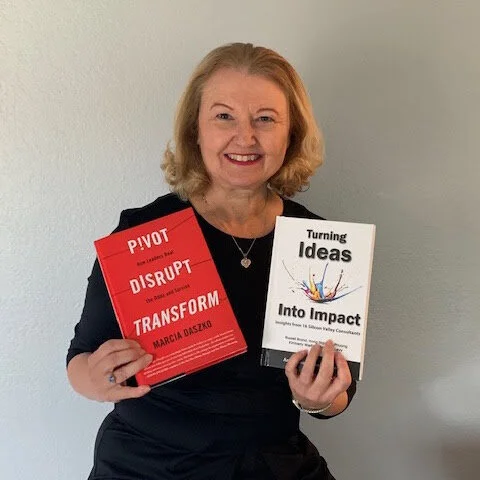
Call her to discuss your challenges and during this COVID19 crisis.  She has been a trusted advisor to executive teams for 25+ years and is the author of the book “Pivot Disrupt Transform” and co-author of “Turning Ideas Into Impact: Insights from 16 Silicon Valley Consultants.” Invite her to speak (virtually now) and see her resources for you at www.mdaszko.com 

Helping small family businesses

image 1.jpeg

WHERE DO YOU TURN IN A CRISIS?

Some people want to go to church or pray or read the Bible. They want to read their children religious books that are age appropriate, wear a medal for a saint for an illness, or burn votive candles in someone’s memory. Church services are closed in most states. People find solace in their homes.

A full selection of religious goods for non-denominational churches can be sent to you during the COVID19 shutdown.

Call Tim Sullivan at the family owned and operated Dubuque Religious Center from 9am-5pm CST at (800) 225-7073 to order.


image 2.jpg

GIVING BACK—FREE AUTO SERVICES IN APRIL

Leales’ Auto Repair and Transmission is Giving Back during the COVID19 crisis. Owner Jim Leale is offering friends, family, and the San Jose community free servicing. There will be no labor charge on the following services:

  • Oil change 

  • Tire rotation 

  • Check belts and hoses 

  • Coolant flush 

  • Check brakes 

  • Check wiper blades 

  • Inspections 

  • Check engine light

For repairs, 50% off labor. Plus parts.

Local pickup and delivery within 5 mile radius from: 405 Keyes St. San Jose, CA | (408) 286-5350

Offer good through April 30, 2020.

Leales’ Auto Repair and Transmission (408) 286-5350

image 3.jpg


Ask Marcia - Leadership Q&A

Week of March 26, 2020 / From her column in the Silicon Valley Business Journal

Q. What makes some leaders and organizations fail and others survive? I need to survive!

A. Leaders and organizations may fail due to many variables outside of their control.  Yet, some leaders will emerge through difficult times because they think differently.  It all begins with the mindset. Through a crisis, they tap in on all the courage they probably didn’t know they had, and they pivot! They see what they cannot control and let it go; they don’t stay stuck there.  They see what they can control and start to create new building blocks to pursue new opportunities.  They plan and adapt. They look for new answers, try new things, and make mistakes, but are resilient and keep moving forward.  They move toward a new future. They make decisions, solve problems, but keep progressing toward a new vision. Those who are curious and are open to rapid learning will prioritize their efforts so their resources and energy are not diluted. In a time of disruption and crisis, pivot and transform—and don’t stop.

Q. My company is full of fear. For weeks, the conversation has been about the coronavirus and its impact on our lives, our families, our communities, and on our society and economy. How do we grapple with the fear?

A. Everyone deals with fear differently. Some people freak out. Others are fearful and hold it inside (but it will show up in behaviors), and others roll with life and keep adapting and seeing opportunities. First, it’s important to identify the fears. They range in intensity and in reality. There’s the fear of failure (of the business) or losing one’s job, fear of the unknown and uncertainty, fear of speaking up or making mistakes. There are over 100 fears. The best way to understand fear and your way through them is to talk about them, share your concerns and anxieties, and discuss what options and possibilities can emerge on the other side of fear.  Fear becomes expansive when people feel they have no control or no options. The most important thing is to not get stuck in pessimistic language.  Leaders need to be centered in reality and also possibility.  If immediately they think about cost cutting and layoffs and failure they will accelerate in that direction.  Instead, gather people to tap in on ideas!  The people who create new ideas, pivot to apply them, think about helping their customers, prioritize and focus, are more likely to survive and come out of the crisis.  Great leaders may even suspend their current business and pivot to produce different products. We’re seeing that today as auto manufacturers like Tesla and GM are shifting their production to produce ventilators. Breweries are shifting to produce hand sanitizers. Some businesses will close temporarily or permanently. New companies will start-up and blossom. 

Q. My staff and I have shifted to working at home. How do we effectively communicate?

A. There are multiple ways to communicate, and there’s no one right way. Try different methods, and discover what works best for your staff. Depending on the size of your company, you might be able to gather all staff on a Zoom or GoToMeeting call for video or audio calls. Or if your company is large, have multiple meetings with or departments or teams. Other technologies can support you during this time such as Slack or Teams to capture your conversations and documents so you have a shared view of your progress. Use the phone to connect with people periodically and see how people are adjusting and transitioning to the new norm and how you can support them.

Q. As a business owner, I’m finding that without my staff in meetings in the office, I feel isolated and am struggling. It was lonely at the top for years, but now’s it’s just lonely. 

A. There’s variety in people, and their workstyles and need for engagement vary. Introverts may relish the remote work environment (if they have a quiet space and no distractions.) Their productivity may skyrocket. For extroverts who get their energy from interacting with people, they may struggle without the freedom to connect with people personally, travel, and engage with customers. Check in regularly to understand what people need, identify how they’re doing, and ask what questions they have. Make sure people understand what needs to get done, but don’t micro-manage people.

Q. What questions can I ask my remote staff to ensure we continue to collaborate and don’t drift apart?

A. If you have a collaborative culture that was in place before the Remote working began, the team will find a way to adapt to carry on the culture. A culture comes out of the leadership and values; that isn’t changing. Here are a few questions to support your transition: What kind of communication and frequency would you like to have? What are your strengths that will be beneficial to you now? How are you feeling and adjusting? Are you clear about what you can   contribute to the team and the timeline? What challenges can we help with? Can you share a small Win that you have had since working remote (it may be work, family, or setting up a workspace related)? What are you doing to take breaks and take care of yourself and separate work and home time? Supporting your staff and each other during the transition is important as they adjust. Everyone may be out of their comfort zone, and over time a new one will emerge.

Send your business leadership questions to Marcia Daszko at md@mdaszko.com

Call Marcia to discuss your challenges for insights during this crisis. Marcia is welcoming leaders to reach out for help. She has been an inspiring strategic advisor to executive teams for 25+ years and is the provocative book author of “Pivot Disrupt Transform” and co-author of “Turning Ideas Into Impact: Insights from 16 Silicon Valley Consultants.” Invite her to speak (virtually now) and see her resources for you at www.mdaszko.com 

Pivot through the pandemic

Pivot through the pandemic

PIVOT DISRUPT TRANSFORM

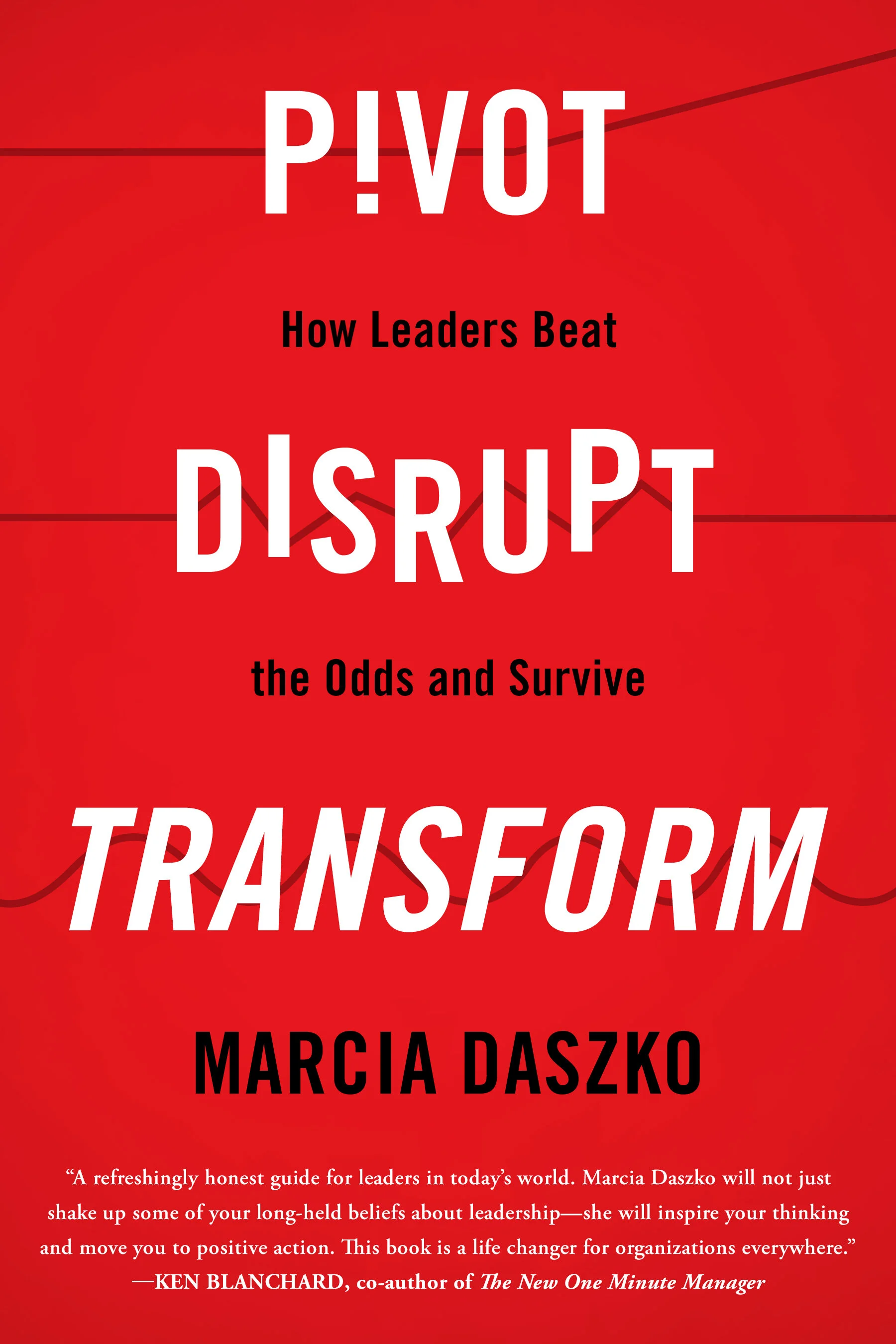
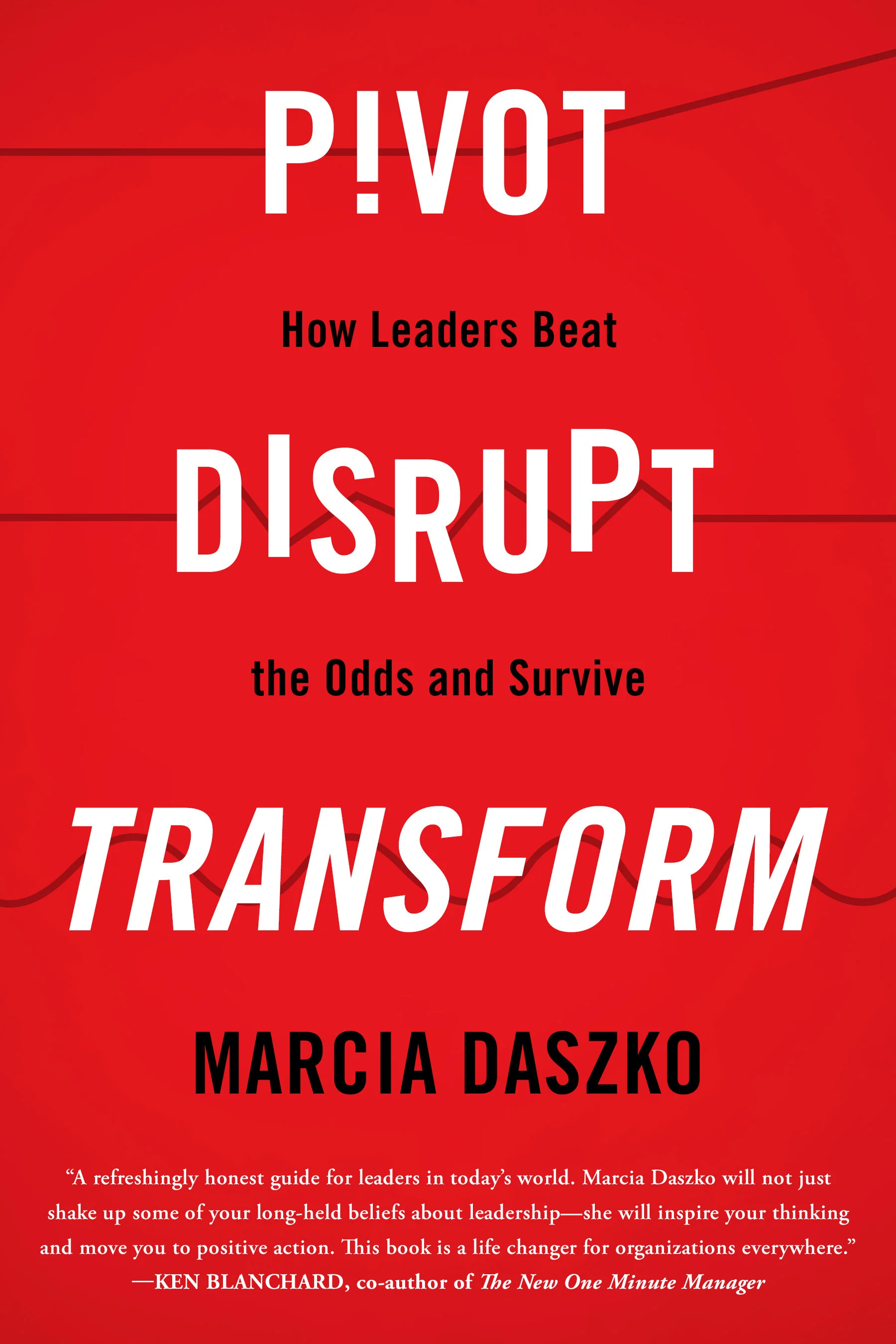
We’ve been disrupted! We need to Pivot and Transform our lives! We won’t find a “new “normal” (the latest buzzword.) I truly didn’t cause this disruption! (the book title just happened to match the crisis we’re in.) We can help people through this crisis that we’re experiencing personally, at home, in our businesses, communities, globally, and in our economy. We will prosper on the other side of this. The timing will be different for everyone.

Read More

TURNING IDEAS INTO IMPACT: Insights from 16 Silicon Valley Consultants

TURNING IDEAS INTO IMPACT: Insights from 16 Silicon Valley Consultants

Last year I was invited to contribute to a new book project that was led by Kimberly Wiefling and Mitchell Levy and co-authored with 15 other Silicon Valley consultants. This diverse community of consultants share their insights, practical approaches and effective methods that their clients have used to guide global Silicon Valley organizations into a hotbed of innovation. Find your copy on Amazon and share your review. Help us all learn together.

Read More

Thought Leader Life 270: Guest Marcia Daszko Podcast

Thought Leader Life 270: Guest Marcia Daszko Podcast

Learn crisis management by thinking differently for lasting success and transformation. This episode features #ThoughtLeader and #Expert Marcia Daszko (https://aha.pub/MarciaDaszko), a C-Suite leadership transformation consultant, a protégé of Dr. W. Edwards Deming (who co-founded two Deming user groups), and co-founder of the non-profit In2In Thinking Network.

Read More

Read a chapter from the PIVOT DISRUPT TRANSFORM book by Marcia Daszko

Read a chapter from the PIVOT DISRUPT TRANSFORM book by Marcia Daszko

Leaders believe there must be a better and bolder way. They are tired and frustrated of the status quo—the same old “ght for a larger piece of the competitive pie”—and they want to seize new opportunities and create a different future. They begin by dis- carding the archaic strategic planning process that they have en- dured throughout their career, and they start adopting a strategic thinking process that will challenge and accelerate their learning and working together.

Read More

Listen to the Leveraging Thought Leadership Podcast hosted by Peter Winick featuring Marcia Daszko

Listen to the Leveraging Thought Leadership Podcast  hosted by Peter Winick featuring Marcia Daszko

Great leaders are open to new learning. Peter Winick and I had a great conversation on his podcast Leveraging Thought Leadership. We discussed why huge companies fail and disappear. Why old methods of motivation no longer work. And how people often forget about their customers. Listen, and discover what you learn!

Read More

Making a Difference

Making a Difference

THIS YEAR in many places there have many challenges. In California, some of our recent catastrophes have been with the wildfires in both northern and southern parts of our state. The impact on hundreds of thousands of families is shocking.

Part of what has emerged from these horrific tragedies is the generosity of people who are coming together to help and serve. For some like the first responders, it is the work they have a passion to do. When the surrounding and global communities step up to donate, share, open their home, or contribute however they can, it’s why we are on this earth, to live well with each other. I’m proud to say that everyone I know who I have talked to has taken time to donate. That’s a huge outpouring of care.

Read More

Marcia Daszko's Pivot Disrupt Transform book launch at Barnes and Noble

Marcia Daszko's Pivot Disrupt Transform book launch at Barnes and Noble

Sunday was a new experience, beginning my book signing process at the Barnes & Noble in San Jose, CA. Thank you Barnes & Noble for being my host and setting up a great space at the front of your store!


Thank you to all who attended the book signing: family, friends, Rotarians, my MBA students, and Bay Area Deming User Group (BADUG) friends. It was non-stop flow of seeing and chatting with everyone for a few minutes for almost two hours!

Read More

Pivot Disrupt Transform book by Marcia Daszko emerges!

Pivot Disrupt Transform book by Marcia Daszko emerges!

PIVOT DISRUPT TRANSFORM, the first leadership transformation book written by Marcia Daszko, is now available for pre-order on Amazon and Barnes & Noble. It will be available in bookstores on Oct. 2. ( Pre-order on Amazon /Pre-order on Barnes & Noble) After years of working on this book and using its principles in my consulting for 25 years; teaching leadership MBA classes in six universities across the nation; and, speaking to corporate and conference groups, I can share PIVOT, DISRUPT, TRANSFORM: How Leaders Beat the Odds and Survive.

Read More

Are you heading in the right direction this year?

Are you heading in the right direction this year?

With more than 6,000 startup companies in Silicon Valley, it’s common knowledge that only about 10% of them will survive. Of those a few will be wildly successful: the next Amazon, Google, Facebook.

SURVIVAL IS OPTIONAL. Some leaders and organizations struggle and fail while others soar with success! What’s the difference? It’s not that hard to succeed, but a few elements are essential. Many organizations don’t have them.

Read More