
Marcia's Leadership Q&As
/
Leadership can be lonely at the top.
Read MoreMarcia Daszko’s inquisitive thinking is based in deep leadership knowledge. She engages everyone to think and re-examine their beliefs, actions, and outcomes. Through her powerful messages in Pivot, Disrupt, Transform, How Leaders Beat the Odds and Survive, no one stays the same. New opportunities are endless.
Call or text: +1 (408) 398-7220
Email: md@mdaszko.com


Q. The work ethic and follow-through in our employees in the past year has taken a nose dive. I’m concerned for our customers and the business. What do you suggest?
A. This is a concern that I’ve heard more from business owners and managers also in the past year. There are a variety of causes. I don’t like making Covid an easy excuse for everything, but it has had an impact on some people’s dedication to work, their job, their company. For other people they were never taught how to be responsible workers and follow through. They didn’t have parents who were role models, or they didn’t have excellent job training, so how could they know what’s expected of them?
Effective onboarding, continual education/training, and two-way communication are all helpful to set the expectations about the work quality you want and the quality of service you want the customers to receive. It’s important to train people, especially if they are new to the job market. Observe them, role play if necessary, ask them for their ideas, and ask them how they think the work can be improved. More and more communication often make a difference!

Q. I’ve been invited to join a cohort of executives to meet regularly and discuss our challenges in our businesses. I’m open to sharing and learning from others. We’re from different industries. Are there any downsides to joining a group besides the time commitment?
A. First, think about your purposes for joining a group of colleagues. Is it a learning group, a time to share or vent your issues and have a sympathetic ear, a social focus, or a time to deeply challenge where you are and explore how you can gather ideas for development and business growth? It may be some or all of these. But define what it really your purpose and what is important.
Second, will you first have a conversation with the other members to determine if this group is a good fit for you. Will they both challenge and support you? Some share old management fads, opinions, and “best practices” that don’t add any value to their learning; people stay in the status quo with little development. Other executive groups make a lot of progress.
It’s important to think about what you want to accomplish and then over a few months, assess if people are just sharing opinions or substantial management concepts, tools, and relevant applications. You should feel intense learning!


Q. Planning for our staff returning to the office is a roller coaster ride, especially with the new Delta variant in full force. Simultaneously, employees are voicing resistance to return because they like working from home. What’s the solution?
A. Your question is relevant and timely. For any crisis or challenge, we have to think of the aim of the organization, and then answer, “what will we do to optimize our system? What are new ways to achieve our goals?” There are customers to serve, applicants to recruit, and employees and vendors to support.
Finding the Win-Win-Win for each organization is a leadership challenge—how to optimize the whole. There are business needs that have to be met so that the company is sustainable. This is a time for pivotal leadership. More than ever, leaders need to discuss (and integrate the voices of the employees and customers) how they are going to create and manage all of the parts of their organization. Use a system diagram. Draw the organization’s interactions (not an Org. chart) and see how the work, information, and communication can flow. You’ll ask new strategic questions.
More important, be open to new methods to accomplish your aim. The more creative you are, the more innovation you can offer. Strive for a happy, productive workplace.

Q. Our corporation is looking at acquiring five to ten companies in the next year or two to help us scale toward our vision. What are the blind spots we should be aware of?
A. Great question! So few corporations think through the M&A process. This leads to more than 80% of M&A transactions failing. The sad part is, there’s such potential for success! The answer is easy; the work is harder, but essential. The issue is that often, corporations that acquire another corporation don’t do two fundamental requirements:
1. They don’t think through the integration process fully (they focus on the financial success and capturing a skillset of workers they need); their potential success is immediately stunted.
2. They don’t assess the leadership and cultural fit. If the two fundamentals are done, leadership (of both organizations) create an integration team.
It’s mandatory to have an Integration Team with the knowledge to optimize the whole transaction—and then follow it through into the next year or two to ensure problems are addressed. They assess how the two organizations (and following on, more) will integrate from a leadership perspective, cultural perspective, and financial perspective. It’s like a three-legged stool. If you don’t have all three legs stable, you’ll fall and fail. But focus on optimizing all three parts, and you’ll have a great potential for long-term success. You need to become an Integration machine!


Q. How do we prepare for people coming back to the office? Some people are excited, and some are very anxious.
A. It’s great to acknowledge that there will be a variety of emotions when people return to work, either part-time or full-time. People may be casual about returning, get to the door and freeze. Anxiety pops up in interesting ways, sometimes suddenly. Others who have been vaccinated for months and carrying on life back to “normal” may be very comfortable. Start with conversations early and on Zoom. Invite the staff to share what their concerns are, how they feel, and together brainstorm how to create a work environment where safety and respect is felt by all. The more people can contribute their ideas and can trust that they will be implemented, the more productive interaction will emerge.

Q. What do you anticipate when it comes to customer service in upcoming months?
A. We are experiencing reduced customer service across industries and across the nation. As soon as the “Open for Business” go-ahead was given in states and counties, especially service-oriented businesses such as restaurants, hotels, and airlines scrambled to simultaneously hire and train staff to serve customers. The challenge arose when there were fewer applicants who were interested in working. Some retired through the pandemic; others changed their value system and decided not to work or to work part-time (25% of women left the workforce and many don’t plan to return anytime soon), and others are collecting unemployment and are in no hurry to return to the workplace for various reasons (family needs, health, etc.).
Now more than ever managers need to inspire, listen, and communicate effectively. Flexibility is going to be one of the most sought-after traits that employees are seeking in their work culture. Will leaders adapt? Will teams be resilient? Systems and processes will need to be efficient and effective since there will be fewer workers available. The more a team can learn and work together, support each other and accomplish their goals together, the deeper that bonds will grow. New ideas, methods and adaptability will be welcome in a healthy workplace of the future.


Q. As our meetings, conferences, and events open up for our sales teams, all employee town halls, our vendors and our customers, what new changes should we prepare for?
A. Having just spoken at a conference for event and meeting planners, the issues and questions they are raising and preparing for are fresh in my mind. The organizations that will likely survive in the long term will be the ones that are seriously communicating with their vendors across their supply chain. They are true partners, sharing every detail with transparency as soon as they are aware of changes—both the good and bad news. All of the parties need to be as flexible, collaborative, and supportive of each other as possible—in action, not just words.
Contracts will also get more specific. How will quality service be defined in a still-Covid world where the number one concern for 60% of meeting planners is the safety of their attendees? Contracts will spell it out. For example, if the peak time for attendees will arrive for registration, specify how many staff members will be needed at the desk (we’ve all seen long lines after a tiring flight, and one person is working the desk.) Specify the training requirements you need to serve your attendees.
Resort destinations are pricey and will eventually come down, but it may take a year. There’s a lot of pent-up demand for people to meet—safely. This is a time to listen to each other and help everyone continue to successfully work out of the pandemic. Those who try to take advantage of others by being inflexible will be remembered in the future. Find the win-win in your interactions to optimize the results for all.

Q. There has been a lot of loss of varying kinds for people over the past year. How do we support each other?
A. Grieving is not generally a huge topic in the workplace, but the past and next years are exceptions. People have experienced a tremendous variety of many kinds of loss. Loss of a loved one or colleague is most devastating. Loss of a relationship, a job, a business, financial stability, the way things were, connections with friends or colleagues are experiences that need to be healed. Everyone grieves in different ways.
There are no right or wrong ways. To heal, people need to feel. Being there for someone just to listen, share stories, share the pain is an important part of the healing process for many. Some people heal quickly and others may take years.
Be patient with each other. Check in with how people to see how they are. Do small things to be supportive. If you ask how you can help, it can put more pressure on the person grieving. Instead, don’t ask; do something! There is a focus on creating mental wellness programs in more schools and organizations to support those who are struggling. Connect people with resources (books, videos, articles, a support group.) Most importantly, don’t brush the grief away. It is the reality and the healing process takes time.


Q. I’ve run teams and my business for years. People recommend I get a coach. How do I know if I need one?
A. You’ve “run teams and a business.” Essentially, you’ve been a leader, facilitator or coach. But how good have you been? How did you keep improving your leading and coaching? Getting a fresh outside perspective on how you do what you do and how you can be more effective is important in life and work.
I spoke once to a successful entrepreneur; in a short chat, he discovered new ideas and ways to look at his business. At the end of the conversation he said, “Oh, I thought I had a successful business, but now I wonder, how much more successful could I have been?” It’s a powerful question. Even if you think you’re doing well, how much better could you be?
Leadership is more than getting a coach or adopting a checklist of leadership traits.
The articles that headline: “Six Tips of a Leader” or Three Things CEOs Do Daily” are so superficial. Leadership takes knowledge about how to optimize systems and develop people. And it takes courage with that knowledge. Being a great leader means committing to continually learning and listening. Leaders can make changes (change management—another fad.)
But great leaders transform themselves and their organizations by seeing through a lens of strategic, systems and statistical thinking. That’s what a knowledgeable coach can bring you—with the questions to guide the implementation of new concepts. If a coach doesn’t understand that, you’ve met a hack with superficial ideas. As resources, excellent leadership books may not be some of the bestsellers by known names—they are selling the sizzle, not the steak.


Q. Who are the best people to listen to in order to get the most accurate picture of how my company is doing?
A. Just as you have multiple people to communicate to, you have multiple groups to listen to. They are all part of your system. There is not an either-or answer, and there is not an answer where you rank the people you as a leadership (team) need to listen to. As a leadership team, you are the visionaries for your organization, so you need to listen to each other and your consultant/strategist who will ask you strategic questions (not provide you with answers.)
You need a system where you can gather the voice of the customers. It’s common to use surveys and focus groups; these are easy methods, but not necessarily relevant. Observing the customer use your product or service is much more effective. Your employees also have a voice and contribute their ideas to improving the organization. How do you listen to them: townhalls, informal conversations, e-mail connections, Zoom chats? Your vendors and industry and future trends are full of perspectives. How do you engage with them? Do you have a plan to attend meetings and conferences to stay up-to date on innovation?
Your competitors are also part of your system; do you create a bigger pie for all to succeed, or do you only continually compete? Leaders think strategically: what can we learn to pursue new opportunities and serve our customers? The more creative you are and experiment, the greater success you may experience. (That doesn’t mean chase fifty ideas at a time; focus, prioritize, plan and proceed, or you can spread your resources too thin and fail.)

Q. How do I build stronger connections between my company and the customers we serve?
A. Trust and authenticity evolve based on the communication (in words and actions) and relationships you have. Having conversations regularly with a diverse group of customers can keep you relevant. Many of the greatest leaders spend a minimum of 50% of their time and often 70 to 80% of their time in customer focused meetings and conversations. Understanding and listening to customers helps you create future products and services for current customers and new markets. Unfortunately, too many leaders spend less than 20% of their time really understanding or connected to their customers. If you can host periodic gatherings and learning sessions with your customers, that is powerful.


Q. I’ve had a company for over ten years. We weathered the pandemic, though it wasn’t easy. We’ve never had a Strategic Plan, nor has my Advisory Board. What’s the value of developing one now?


Q. Our organization has grown, and now there are more people available to do the day-to-day work that managers used to have to deal with. But many managers still have a strong tendency to take on the tasks. How do we break the “I’ll take care of it” reflex?
A. Great question, and I’m smiling! One of my mentors told me over 20 years ago, “a great leader is a lazy leader.” That’s a pretty surprising yet memorable comment, isn’t it? It’s also powerful. A leader doesn’t do the tasks that can be delegated unless it’s a time when all hands need to work together to get the job done. As people move from a more detailed and sometimes analytic role (like a sales person or an engineer) into management and leadership, it means the mindset and the role of the person also must change. Leaders need to think strategically, create and work ON the systems that the people work IN, anticipate and pursue opportunities, and develop the people. They delegate the work and create the environment where people contribute ideas and are self-motivated to contribute.

Q. It’s easy to get caught up in everyday work. How do you get off the hamster wheel to make time to plan and do something big or meaningful for the company?
A. Whether an executive, a manager, or a team member, it’s important to have a tentative plan for your day and week. Then adapt as needed. If you know what to need to accomplish, you can focus and prioritize. Look at how you spend your time. If you’re in back-to-back meetings, when do you read and respond to emails ,customers’ requests, think and plan, and do your work? Planning, communicating, reflecting on lessons learned, are part of the job. Schedule time for those essential tasks, too. You might need to schedule 30 or 60 minutes at the beginning and end of the day to keep information flowing. If you don’t Plan, you will be in Do-Do-Do mode all day long, just reacting and feeling drained and stressed by the end of the day. Schedule quiet time to think, plan and focus on the priorities. Use the Plan-Do-Study-Act (PDSA) cycle, a tool to continually improve. You work short term, but think longer term to contribute doing more meaningful and innovative work in the company and for the customers.

Q. I’m going to step down from the President position for personal reasons. I’m concerned I may miss it, regret my decision, or not agree with some of the decisions my predecessors make, though I’ve been grooming them for months. What do I do if I regret leaving?
A. It will be natural to miss the leadership you’ve had, the people you interact with, the challenges and routines, etc. Your work and position has been a big part of your life. It’s time to consider your transition. Reflect on your contributions, what you learned and the progress you made, your legacy, and the reality of the emotions (the good and the bad.) You may want to take a break for a few weeks or months before moving on to your new life or encore career. You may feel a loss of what you miss; it’s natural. Grieve what you miss, so you can move forward. Look forward to new opportunities, new routines, new experiences. An important step is to Let Go. Don’t look back or stay involved in the decisions (unless you’re called for advice.). Give the new leader space to lead, to explore, and to make mistakes, too. Most people have a transition time; take that time to adapt, and have some plans so you don’t go from working full-time to having nothing on your calendar. Give your new life space and an opportunity to be very self-satisfying. It has happened, but rarely that leaders are called back into a company to deal with a special project, to save it or turn it around (like Steve Jobs at Apple.). If that happens, assess the situation and consider giving yourself a timeline to make it a temporary time and not permanent. Think about the why before re-entering. Every situation is different, so there is not one answer, but keep in mind why you left and your life goals and stay true to those.
Send your leadership and team questions to Marcia Daszko at md@mdaszko.com. She works with Boards, C-suite leaders and teams to pivot, innovate, accelerate and achieve bold results never before imagined. A provocative keynote & virtual speaker, strategic Deming advisor/consultant for 25+ years, she is the bestselling author of the book “Pivot Disrupt Transform.” www.mdaszko.com



Q. I’ve cleared my In Box and finished my calls at the end of my day. I’ve got 10 or 30 free minutes. What are the best things I can do?
A. This answer will be different for each individual. Time every day (even 10 or 30 minutes) for self-care is rejuvenating. I’ll share a few ideas, and see what resonates for you.
Over time, you might try different ideas. Be quiet, close your eyes, reflect on your days: did you accomplish what you planned; did you help someone; did you refer someone; what did you learn; what mistakes did you make; what will you improve tomorrow; what’s your plan for tomorrow?
Other options are to listen to a podcast or in Clubhouse; read an article; write a thank you card, a letter, a poem, or write in your journal. Do some physical activity, a video exercise class. Do something that you enjoy for yourself. Or do something special for someone else: send flowers and surprise someone
Think about the people who make a difference in your life, often times those closest to you and thank them and give them recognition, both children and adults.

Q. Sometimes it feels like work is all-consuming. How can I create more distance between my work and personal life?
A. Over the past year, people have experienced such different situations. Some have had to work less hours or leave the workforce due to family obligations. Some have worked less hours but improved their efficiency and productivity. Others have gotten consumed with work and Zoom meetings.
Part of work becoming all-consuming may be the habits you’ve created. If they’re not healthy, it’s time to break the bad habits and create new ones. When you think about your Wheel of Life, what are the parts that make up your life? Family, hobbies, friends, career, fitness and sports, health, finances, spiritual, school, romance? Are you dedicating your time and energy (not just your words) to the parts of your life that are important to you?
Schedule time to dedicate to the parts important to you. Put healthy limits on the parts that are consuming you. Schedule your work hours. Set up consistent habits so you feel a division of work and home life. Create some routine at the beginning and end of your day so that you prepare for your day.
Then change your venue to begin your work day. Take breaks and get a change of scenery; take a walk or a drive for 10 or 30 minutes. Interact with different people. Then go back to work. Finish your day and shift your venue again.
Do something for yourself, with family or friends to take the mental break. Both routine and some creative outlets and variety will be refreshing and healthy. Keep trying new things and see what helps you feel better.


Q. What traits do you think most great leaders have?
A. There are hundreds of traits that great leaders may have. But the essential focus for leadership is not really about attributes. Thinking about leadership traits is a static approach. Instead, think about people continually developing their leadership as a robust and dynamic process. Leaders are creative, questioning, and continually improving their thinking and their actions.
Define some characteristics of leadership and look at how those can be improved over time. Great leaders have a confidante, a trusted advisor that continually teaches, challenges, and encourages them in a safe environment, yet beyond their comfort zone.

Q. What kind of duties and responsibilities are best left solely in the hands of a leader and not delegated to a subordinate?
A. Here are a few essential duties of a great leader that they cannot delegate. Leaders are accountable for the system (organization) and they can not hold individuals IN the system accountable for the results of the system. This is a huge differentiator that many leaders don’t get—the difference between accountability and responsibility. Leaders are accountable for the results because only they can change the System. They need to work ON the System to improve or transform it if they don’t like the various outputs and measures. Individuals and teams are responsible to contribute to improving the system (and processes) with management.
Leaders also cannot delegate the organization’s transformation. The CEO/President/Owner leads the transformation and cannot delegate that. CEOs of Ford, GM, Xerox, etc. have owned their own transformation—it’s how they saved and turned around their organizations. Transformation is not easy. The thinking is different and difficult, but also essential and satisfying work. Leaders create the culture through showing their leadership and communicating their values, priorities, and focus. Leaders also create the environment where people are self-motivated; that’s where the power is. Leaders don’t motivate people (sometimes they de-motivate them and let “best practices” and management fads creep into their organization. Those can cause internal competition and dysfunctional workplaces.). Leaders develop and invest in their people and grow the business.

Q. What’s the best way to cultivate a sense of self-awareness in myself as a leader?
A. As we’ve heard many times, “we don’t know what we don’t know.” It starts with what we believe. Many people believe that when they’ve graduated from high school, trade school, or college, they’ve gotten the diploma and they’re “done” with the bulk of their learning. But their journey of learning is just beginning. They embark into personal lives and careers—and maybe multiple careers over decades and meet leaders (good and bad) who become mentors. Deep learning begins when people want to explore who they are, what they want, and where they’re going. Leadership develops when they begin to ask more questions. Ask questions about choices, direction, and how they can contribute. How will they be authentic in words and actions?
Developing leadership (naturally what each person has within themselves) means continual learning, studying, having meaningful conversations, and most importantly asking questions and challenging the status quo. Great leaders don’t blame, judge, and make excuses. They are creative, search for solving problems with others, and see possibilities and opportunities. People have busy days, productive days, days of struggle, and days to reflect. To become more self-aware, listen more, read more, question more, experiment more, and make more of a difference. In doing these things, you learn more about yourself—and where you need to push out of your own comfort zone to grow.
Send your leadership and team questions to Marcia Daszko at md@mdaszko.com. She works with Boards, C-suite leaders and teams to pivot, innovate, accelerate and achieve bold results never before imagined. A provocative keynote & virtual speaker, strategic Deming advisor/consultant for 25+ years, she is the bestselling author of the book “Pivot Disrupt Transform.” www.mdaszko.com


Q. How do I hold myself accountable to lead, set good examples, and maintain standards for the people in my organization?
A. Think about what you want to accomplish and what you want your organization to accomplish. The culture and the workplace you create and the way you interact with your employees and customers is a reflection on you. What do you believe, assume, and what do you stand for—intellectually, emotionally, and in action? Do your words and actions match? These are based on your values. You want your values to blossom and be reflected in your organization. Take them from the Me to the We. Identify a few essential values and live them and communicate them every day in words and actions. When there’s a misstep, learn together (don’t blame), and move forward.
Q. As the president and business owner of my company, I sometimes need an objective perspective. How can I find someone who can provide that?
A. People need resources and advisors through life, whether it’s a doctor, teacher, or advisor. Every team needs a coach. Every student needs a teacher. Some systems provide resources like a school coach or teacher. But if you lead an organization or business, you need to find someone who is sincerely committed to guiding and educating you. There are multiple ways to find a knowledgeable resource. A common way is to ask friends and colleagues who you trust for referrals. Another common resource that is growing in popularity because it’s at your finger tips is Linked In. You can search for advisors, reach their profiles, expertise, and testimonials. See common connections you have. Connect with them and have conversations and assess if they have the personality, knowledge and ability to build trust with you. If they are a trusted advisor, they will ask many questions and help you think at a new level. If they both provoke your thinking and make you uncomfortable, yet you feel safe, you may have found the match you need to explore new options and decisions.
Strange bedfellows have emerged in the past year as the world addressed the pandemic. For example, GM and Ford pivoted their production lines to make ventilators, and beer breweries shifted to produce hand sanitizers.
Pharmaceutical companies around the world began the race to create vaccines to protect society from COVID19 and its variants. Independently, corporations compete to win; they are rivals. First to market, best to market—who will it be?
The pandemic has driven all of the pharma companies around the world to discover vaccines that will be safe and effective.
This week we saw the Biden administration and the U.S. Department of Health and Human Services identify and supply the funding so two typically rival mega-pharma corporations (Merck and Janssen, a Johnson & Johnson company) would collaborate, unite, and support each other. Together they will accelerate the vaccine production needed. Merck did not succeed in discovering their own vaccine, but they are scaling up their manufacturing capacity to deliver millions of vaccine vials for distribution to the people in need.
The Strategic Compass is a powerful inter-dependent strategy tool that can be used to drive toward and accelerate successful results in any or across organizations and industries. The Compass has five interactive parts. It quickly helps leaders to:
focus and prioritize
ask and answer the essential questions, and
communicate to the teams the extraordinary results they need to achieve.
When the compelling aim is clear, great leadership communicates it to the people who can collaborate and deliver. By what method will they achieve the aim? What values will they stand for in action, not just words? Who will they serve and what do those customers/patients/members/students need? How will leaders measure progress and success?

Strategic Compass
Whether an organization has its annual goals to achieve or a global pandemic and crisis is threatening survival of society as we knew it, leaders can focus and address their issues. The Strategic Compass is an imperative guide.
There are times for competition, but there are more compelling opportunities for cooperation and collaborations. Businesses may compete, but during the times they collaborate, we all may win. When the Compelling Aim is enormous and too large for one organization, leaders who merge resources, creativity, and brain power, create more successes. Another example is climate change. It will take millions of people working together to reverse the impact of global climate change.
When you’re faced with challenges and crises, look at the bigger picture to discover the power of Win-Win-Win results. Use your leadership and courage to answer the questions on the Strategic Compass, and optimize (not merely maximize) your results.
Send your leadership and team questions to Marcia Daszko at md@mdaszko.com. She works with Boards, C-suite leaders and teams to pivot, innovate, accelerate and achieve bold results never before imagined. A provocative keynote & virtual speaker, strategic Deming advisor/consultant for 25+ years, she is the bestselling author of the book “Pivot Disrupt Transform.” www.mdaszko.com
A. Great leaders, at work and at home, anticipate and consider challenges and how they will respond to them. Whether it’s pilots training to deal with a challenge in flight, families preparing for an earthquake or a hurricane, a driver being aware of the traffic, a company preparing for a pandemic or loss of a major client, people do a variety of crisis planning. Some companies had a plan in case they were ever faced with a pandemic. Did your company have a plan? Those that had one had created it with calm rationality and could quickly adapt it. Others had to rapidly pivot, or they struggled.
Thoughtful leaders at home and at work think ahead. They scan their environment for safety. What might they be faced with? With your team, what do you need to think about, anticipate, discuss, plan and prepare for? It’s never too late to make a plan. That’s what leaders do. When it’s needed, leaders and their rapid action teams adapt and pivot, and respond. If an unforeseen crisis occurs, teams who have a foundation in leadership thinking, will respond rather than react or freeze in fear.
A. It is not uncommon for a founder, owner or executive to move aside as an organization grows, needs to scale, or goes through transitions they have no experience in or are uncomfortable with. The enterprise may be moving and growing at a fast pace, building in complexity, or innovating into new areas of expertise. If executives feel overwhelmed, uncomfortable, fearful, or are micro-managing, they need to assess if they are continuing to find joy and satisfaction in their current position.
There are multiple ways to address this situation. Many young founders have a close mentor(s) such as a supportive CEO, Board Director or a professor who guide and advise them as they navigate and develop. Or an executive may have founded an organization and be passionate about product development, but may not have an affinity for running or growing a business. People have natural leadership within them and each person needs to decide where they can best contribute and feel fulfilled.
2021 will be a year of thoughtful action for leaders and their teams.
Strong Connections
It means creating a stronger link with:
Customers
Collaborative team members
Partners
Suppliers
Your coaches and mentors
Investments Are Essential!
2021 will be a Year of Investment! Invest in:
Yourself; your self-care, your learning; your time to be humble and grateful;
Rapidly developing your staff, your teams, your colleagues, and your partners; educate, develop skills, and strengthen their communication and team-building.
Deeper commitment to communicating in multiple ways to all of your team, in every corner of your operation;
Your systems and processes! What do you need to do to optimize your System (not maximize!) and quickly improve your processes? The status quo and small improvements are not enough.
Your infrastructure; build out more foundational systems for scaling growth into the future. The time is now!
Reduce the Built-In Flaws, Complexity, and Waste
Organizations are full of waste (estimating 60-80%.) Ensure that you’re reducing waste and increasing productivity:
Conduct a Team Audit. Are your teams all focused to support the Aim of your organization? Are they making progress at the speed you need? If you have too many teams that are struggling, you’re zapping the energy of your resources. Focus on a few, and disband those that are unproductive.
Post-pandemic planning and 2021 Strategic planning are different. Are you ready to implement both—at the speed that you will need?
Teams are burning out, zooming hour after hour (executives, managers, and employees) are exhausted, and often are too afraid to speak up. I’ve developed new team education, processes, and policies that can increase your meeting time productivity and reduce the time in meetings by 40 to 60%. Help your teams!

The challenges caused by the Covid-19 pandemic demanded unprecedented responses last year that few leaders had ever had to make. Across all sectors, leaders faced new dilemmas on an hourly or daily basis.
Pivotal leadership — the ability of leaders to pivot and adapt as their world is disrupting around them — is essential. What does it really mean?
“Pivot” means to make a fundamental, often abrupt and rapid change in direction.
Leaders had to take the essential step to pivot in 2020, to either survive or thrive, and they’ll have to keep doing it this year.
As Covid hit, some executives immediately closed their companies and furloughed their employees. Others adopted a “wait and see” stance, assuming the pandemic would end soon.
But pivotal leaders quickly assessed the situation, sensed what their constituents needed, and responded. They gathered rapid action teams, brainstormed ideas, and created solutions. They designed, focused and applied on the move.
Pivoting takes vision, rapid decision-making, and ubiquitous communication. It’s a commitment to experiment and take immediate action. Time is of the essence!
Leaders who pivot have a compelling, focused aim, and a solid foundation of management thinking to draw from.
We saw auto manufacturers GM and Ford pivot and produce 100,000-plus ventilators for hospitals. Distilleries made hand sanitizers. Luxury clothing manufacturers produced PPE gowns and masks. Schools pivoted to virtual learning, healthcare to telemedicine, and millions began working remotely.
Why pivot? Current needs aren’t being met. The status quo doesn’t work. Leaders see a need and boldly jump into action.
People who continually generate the most creative ideas are the most resilient and likely to pivot, survive and thrive.
I reached out to several executives to find out more about the challenges they faced early on in the pandemic and how they applied pivotal leadership to adapt their organizations. Here are their stories.
“We’re doing things we’ve never done before,” said Chris Boyd, a senior vice president and area manager for Kaiser Permanente, who led Kaiser’s Santa Clara facility when Covid-19 first hit. “For healthcare the pandemic got very real, very quickly.”
Immediately, the leaders at Kaiser identified its needs: Safety, personal protective equipment, a command center, and accelerated and widely dispersed communication.
“At first, the projections were so dire, but we succeeded in doubling the capacity of the hospital,” Boyd said. “By the second surge, we were well prepared.
“Communication was crucial, and it had to be different for everyone. We did video visits with patients to video broadcasts to employees, but we also needed contact with others who were not at a computer. Executives took a beverage/snack cart and visited staff to address their fears.”
Great leaders are always pivoting, creating, innovating — finding new solutions and markets. They see a crisis or amazing possibilities and bold opportunities.

Serial entrepreneur Toby Corey founded GetVirtual in March 2020. The Santa Cruz-based organization connects small businesses affected by Covid-19 to tech-savvy university students who could help pivot the businesses online with digital tools.
TOBY COREY
In March 2020, serial entrepreneur Toby Corey founded GetVirtual.
The Santa Cruz-based organization connects small businesses affected by Covid-19 to tech-savvy university students who could help pivot the businesses online with digital tools. Students receive college credits from partnering universities (it started at U.C. Santa Cruz and has spread to other Bay Area universities), invaluable experience in entrepreneurship, and an opportunity to give back to the community.
“The need is extraordinary. Everything is a process,” Corey said. “There are already 100 students working with 100 small businesses. The students want to be social entrepreneurs, be intellectually curious, and experiment.”
Corey said that altruism is important and that Generation Z is especially altruistic.
“Modern thinking is mindful,” he said. “It’s paying it forward; we’re doing that. We inspire greatness, disruption and innovation.”
The mindset of leaders who are able to pivot are focused on growth, the future, and meeting new needs with bold solutions.
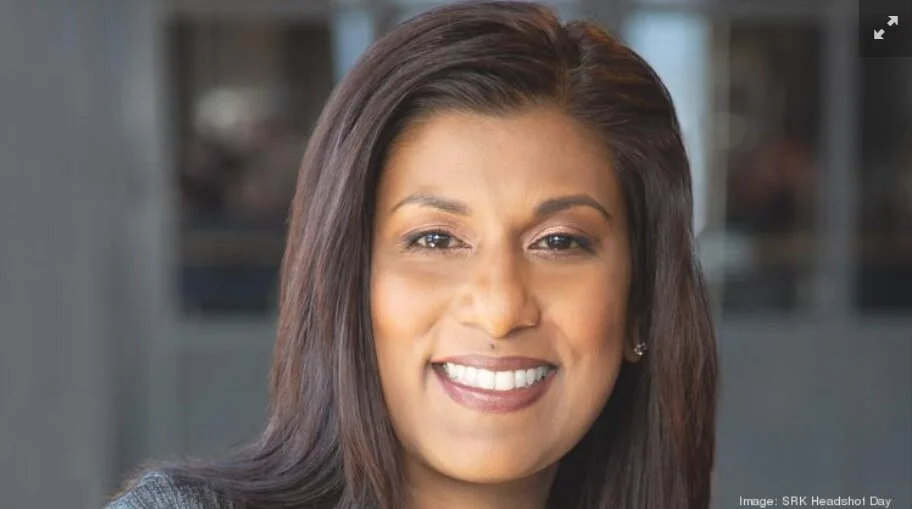
Kavitha Mariappan, Zscaler executive vice president, customer experience and transformation.
SCOTT R. KLINE
Leaders pivoted for the safety of their employees, contractors and customers, locally and globally. For Zscaler — a San Jose cloud security company that became 2018’s biggest Nasdaq tech debut — that meant also dealing with a new level of security.
“One pivot has been the rapid, higher-level emergence of IT for business continuity. IT has been a savior,” said Kavitha Mariappan, Zscaler’s executive vice president, customer experience and transformation. “Preventing disruptions, addressing threat activities (the Zscaler cloud processes 140 billion transactions per day), being resilient, and innovating are what we do to protect the ‘crown jewels’ and protect our customers.
“We talk to our customers about transformation, and pivoting is critical, for security, safety and scaling for the future,” she said. “The pandemic was a true test in leadership authenticity and empathy. It’s a time of growth. We accelerated our initiatives and invested more in our people, infrastructure, and customers. We have a ‘rest and recharge day,’ a day to take a break. We’re anticipating, ‘What does re-entry to the office look like?’”
The conferences and trade show sectors, as well as travel and hospitality industries, were impacted or devastated in 2020. The initial impact on global executive briefing centers where sales teams meet with customers was also felt.
Elizabeth Simpson, president of the Association of Briefing Program Managers, reported how rapidly her 600 business members pivoted with each other.
“It was a tsunami of sharing,” she said. “Members immediately asked for resources to go virtual. We didn’t have them, but two members responded with help for the whole community.”
She continued, “One of our members, Pam Evans, senior director of the Executive Briefing Programs at Palo Alto Networks, made a powerful pivot with her team. She met with the VP of sales to say, ‘We’re open for business. We can take care of our customers virtually.’”

Bob Linscheid, the new CEO of the Silicon Valley Organization, is the past president/CEO of the San Francisco Chamber of Commerce, as well as CEO of Linscheid Enterprises Inc.
TOMAS OVALLE/ SILICON VALLEY BUSINESS JOURNAL
Bob Linscheid joined the Silicon Valley Organization last fall to help the wounded organization get on a new path forward.
After an internal upset caused the previous CEO to resign, Linscheid was tapped to be interim president and CEO. He said he is ready to make a pivot that heals the 133-year-old organization.
“My job is to find the SVO’s path to reconciliation. As the No. 1 most innovative city in the U.S., San Jose is expressing its needs.” Linscheid said. “I’m doing a massive amount of listening to 1,200 diverse members’ voices and processing a lot of information. We have problems to solve, and we’ll be stronger as a group to make a difference. Great leaders hang out in uncertainty, but will be the most innovative.”

San Jose State head coach Brent Brennan with linebacker Isa'ako Togia at CEFCU Stadium.
TOMAS OVALLE
From his first day four years ago, Brent Brennan, San Jose State University’s head football coach, began a holistic approach to develop the young men on the team.
In his first two years, the Spartans won just three games. This season, he took the team to the Mountain West Conference championship and won — something that hadn’t been done in nearly 30 years.
With 110 players, Coach Brennan defined success by many measures, not just on the scoreboard. They focus on academics, health, training, and engaging with the campus and community. The team supports other athletic events, delivers dinner kits, and visits schoolchildren.
“Football is the best sport to learn about systems and holistic thinking. The game is a good training ground to pivot. It’s the process, the struggle. The players need to lean on each other. The pieces come together,” Brennan said. “The mindset is (to) keep moving forward: Go to class, get stronger, make good choices, contribute to the community, deal with setbacks together. Their pivotal growth as a team came when they each started caring more about each other and giving to the team. They are more connected.”
What do you anticipate in 2021? Are you ready to pivot at the speed you will need? What leadership strategies and creativity do you need? Have you assessed your ability to lead and done your pivot audit for 2021? It will not be business as usual.
Pivoting means that leaders will transform and go where they never before imagined!

Marcia Daszko has been working with senior executives for more than 25 years. She guides leaders to pivot to survive, rapidly scale, and achieve bold results. The bestselling author of “Pivot, Disrupt, Transform,” she serves on various boards and has taught MBA classes at six universities. Contact her at md@mdaszko.com.
TOMAS OVALLE/ SILICON VALLEY BUSINESS JOURNAL
The challenges caused by the 2020 pandemic demanded unprecedented responses that few leaders had ever had to make. Across all sectors leaders from business to healthcare to education to non-profits, faced new dilemmas on an hourly or daily basis.
Pivotal leadership--the ability of leaders to pivot and adapt as their world is disrupting around them--is essential. What does it really mean?
Pivot means to make a fundamental, often abrupt, and rapid change in direction.
Pivoting is essential to survive or thrive. Leaders had to pivot in 2020 and will continue in 2021.
Some executives immediately closed their companies and furloughed their employees. Others adopted a “wait and see” stance, assuming the pandemic would end soon.
But pivotal leaders quickly assessed the situation, sensed what their constituents needed, and responded! They gathered rapid action teams, brainstormed ideas, and quickly created solutions. They designed, focused, and applied on the move!
Pivoting takes vision, rapid decision-making, and ubiquitous communication. It’s a commitment to experiment and take immediate action. Time is of the essence!
Leaders who pivot have a compelling, focused aim and a solid foundation of management thinking to draw from.
We saw auto manufacturers GM and Ford pivot and produce 100,000-plus ventilators for hospitals. Beer distilleries made hand sanitizers. Luxury clothing manufacturers produced PPE gowns and masks. Schools pivoted to virtual learning, healthcare to telemedicine, and millions began working remote.
Why pivot? Current needs aren’t being met. The status quo doesn’t work. Leaders see a need and boldly jump into action.
People who continually generate the most creative ideas are the most resilient and likely to pivot, survive, and thrive.
Pivots Drive Transformation in Healthcare
As with any pivot, Chris Boyd, senior vice president & area manager at Kaiser Permanente, Santa Clara said, “We’re doing things we’ve never done before! For healthcare the pandemic got very real very quickly.”
Immediately the leaders at Kaiser identified its needs: safety; PPE; a Command Center; and accelerated and widely dispersed communication.
“At first the projections were so dire, but we succeeded in doubling the capacity of the hospital,” Boyd said. “By the second surge, we were well prepared.”
“Communication was crucial, and it had to be different for everyone. We did video visits with patients to video broadcasts to employees, but we also needed contact with others who were not at a computer. Executives took a beverage/snack cart and visited staff to address their fears.”
Great leaders are always pivoting, creating, innovating—new solutions and markets! They see a crisis or amazing possibilities and bold opportunities.
Pivot to Social Entrepreneurship and Survival
In March 2020, serial entrepreneur Toby Corey (US Web founder, Solarcity, Tesla) founded GetVirtual. The Santa Cruz-based organization connects small businesses affected by Covid-19 to tech-savvy university students who could help pivot the businesses online with digital tools. Students receive college credits from partnering universities (it started at UC-Santa Cruz), invaluable experience in entrepreneurship, and an opportunity to give back to the community.
“The need is extraordinary. Everything is a process,” Corey said. “There are already 100 students working with 100 small businesses. The students want to be social entrepreneurs. Be intellectually curious and experiment. Altruism is important. Generation Z is very altruistic. Modern thinking is mindful. It’s paying it forward; we’re doing that. We inspire greatness, disruption, and innovation.”
The mindset of leaders who are able to pivot are focused on growth, the future, and meeting new needs with bold solutions.
IT Pivots As Saviors for Business Continuity
Leaders pivoted for the safety of their employees, contractors, and customers locally and globally. For cloud security company Zscaler, that meant also dealing with a new level of security. “One pivot has been the rapid, higher-level emergence of IT for the business continuity. IT has been a savior,” Kavitha Mariappan, executive vice president, customer experience and transformation, said. “Preventing disruptions, addressing threat activities (100 billion per day), being resilient, and innovating are what we do to protect the ‘crown jewels’ and protect our customers.”
“We talk to our customers about transformation, and pivoting is critical, for security, safety and scaling for the future. The pandemic was a true test in leadership authenticity and empathy. It’s a time of growth. We accelerated our initiatives and invested more in our people, infrastructure, and customers. We have a ‘rest and recharge day,’ a day to take a break. We’re anticipating, ‘What does re-entry to the office look like?’”
Executive Briefing Centers (EBCs) Go Virtual
Industries such conferences, trade shows, travel and hospitality were impacted or devastated in 2020. The initial impact on global executive briefing centers where sales teams meet with customers was also felt.
Elizabeth Simpson, president of the Association of Briefing Program Managers, reported how rapidly her 600 business members pivoted with each other, “It was a tsunami of sharing! Members immediately asked for resources to go virtual. We didn’t have them, but two members responded with help for the whole community!” She continued, “One of our members, Pam Evans, senior director of the Executive Briefing Programs at Palo Alto Networks, made a powerful pivot with her team. She met with the VP of Sales to say, “We’re open for business. We can take care of our customers virtually.”
Pivot to Healing and Innovation
Interim President & CEO Bob Linscheid joined the Silicon Valley Organization (SLO) to help the wounded organization get on a new path forward. After an internal upset caused the previous CEO to resign, Linscheid is ready to make a pivot that heals. He is listening to the 1200 diverse voices of the members in the 133-year-old organization.
“My job is to find the SLO’s path to reconciliation. As the No. 1 most innovative city in the U.S., San Jose is expressing its needs.” Linscheid said. “I’m doing a massive amount of listening to 1,200 diverse members’ voices and processing a lot of information. We have problems to solve, and we’ll be stronger as a group to make a difference. Great leaders hang out in uncertainty, but will be the most innovative.”
Pivoting a Football Team
From his first day four years ago, Brent Brennan, San Jose State University head football coach began a holistic approach to develop the young men on the team. In December 2020 they won the Mountain West Championship (for the first time since 1991.)
With 110 players, Coach Brennan defined success by many measures, not just on the scoreboard. They focus on academics, health, training, and engaging with the campus and community. The team supports other athletic events; delivers dinner kits, and visits schoolchildren.
“Football is the best sport to learn about systems and holistic thinking. The game is a good training ground to pivot. It’s the process, the struggle. The players need to lean on each other. The pieces come together. The mindset is keep moving forward: go to class, get stronger, make good choices, contribute to the community, deal with setbacks together. Their pivotal growth as a team came when they each started caring more about each other and giving to the team. They are more connected.”
2021 Pivots
What do you anticipate in 2021? Are you ready to pivot at the speed you will need? What leadership strategies and creativity do you need? Have you assessed your ability to lead and done your Pivot audit for 2021? It will not be business as usual.
Pivoting means that leaders will transform and go where they never before imagined!
Send your leadership and team questions to Marcia Daszko at md@mdaszko.com. She works with Boards, C-suite leaders and teams to pivot, innovate, accelerate and achieve bold results never before imagined. A provocative keynote & virtual speaker, strategic Deming advisor/consultant for 25+ years, she is the bestselling author of the book “Pivot Disrupt Transform.” www.mdaszko.com
A. Issues that challenge executives are the health of the business: identifying their priorities and planning how they will achieve their goals. These topics demand a high level of interactive communication, decision-making, and delegating with clarity. Smart leaders will keep high-touch with their customers and employees, too. As one of my favorite quotes goes, “Everything we do, we do through people.” Don Petersen, retired CEO, Ford Motor. The pandemic has required people to adjust, but it also has taken a toll on people from computer fatigue, reduced in-person people interaction, fluctuating productivity, and unhealthy boundaries at home or at work. These all impact morale, retention, and employee engagement.
Great leaders will invest more in their people in 2021 in various ways. They will offer more personal development opportunities and classes that support their teams. They’ll invest so employees can purchase what they need to have a better working environment. They will be creative and engage employees in interactive, robust exercises on-line. Some organizations have announced No Meeting days so people can regenerate, take some time to re-energize in their own way, or have some quiet time to get their work done without interruptions. There are many possibilities.
A. We’ll rebound well, the more we believe we can do it together. It will be tough work! And here is a lot of tough work to do—the work that was happening when the pandemic hit and got sidelined (like other medical research.) It means every individual must think about taking responsibility for him/her/self and some responsibility for their neighbors and community. Thankfully, we can see the light at the end of the tunnel. Three corporations have announced the development of vaccines with higher than 90% safety in their clinical trials, and the FDA will confirm that within weeks. A military general with a specialty in logistics will lead the roll out of the vaccine distribution plan.
As Alan Weiss commented in his weekly Morning Memo (Nov. 23, 2020): “If we can do this in the face of serious illness and deaths, sheltering and lockdowns, isolation and shortages, we can certainly fix our infrastructure, improve our schools, provide quality healthcare to all, and develop an intelligent immigration policy.” Our work continues as we need to transform broken systems. The question is, what leadership foundation, thinking, and plan will you have in place for 2021 and post-pandemic? The time is NOW to do your strategic thinking and planning. Time is of the essence! If your sense of urgency is a “wait and see” attitude, you’ll be struggling in 2021, not leading. It’s a choice!
November 2020
Q. If 2021 is another year of uncertainty (and it will take time to get us past the impact of the pandemic and the economic hit), how can we best prepare?
A. Get your team very focused on the business (or parts of the business) that best makes a difference to your customers. Let other projects that don’t add value fall by the wayside until you have the resources to pursue those. Second, together have conversations with your staff regularly about ways to improve the business. Bring problems to the teams and have everyone contribute to solving the problems. They’ll feel more engaged when they contribute and during challenging times, and the company can use all of the ideas it can get!
Q. How can we reduce the fears that people have about the rest of this year and 2021?
A. Identify what those fears are. Share them. While there is uncertainty about the future, there’s always uncertainty. It’s just at varying degrees. Together brainstorm and discuss what you do know! You’ll find that that list is long. From that foundation, you can plan the actions you will take. More productivity will emerge from having control of what you do know. Then you can anticipate and consider your options. The more you communicate effectively (short, focused, action-item meetings), the greater difference you can make Together.
October 2020
Q. My team feels disconnected from our customers. What are people best doing to keep in touch?
A. It’s fascinating during these times when communication is paramount that some customers feel that their vendors and partners have disappeared. Others find that they are in constant contact and well-supported. During these first eight months of chaos, teams either stepped up, assessed the new situations, and pivoted to meet customers’ needs, or they hunkered down.
We’re more than eight months into this pandemic. Organizations need to pivot and escalate to meet clients’ or a new market’s needs rapidly. Communicating frequently with various methods (calls, emails, text message, newsletters, Zoom meetings, webinars) are all possible. Use a variety and see what works best for your customers.
Q. With so many issues bombarding my executive team and our project teams, how do we decide where to focus?
A. Being able to prioritize and focus is a path to developing great leadership. Whether you’re a solo entrepreneur with a long To Do list, or you’re managing 10, 100, or 1000 people, there are only 24 hours in a day and only a few issues you can focus on. To decide what to prioritize and where to focus your time and your organization’s time, start with your Aim and its link to your Customers. What are you trying to accomplish to serve your customers? That’s where you begin.
Make time to listen to your customers. Start everyday with that focus. Read their e-mails and talk to them. If you spend several hours a day focused on communicating with customers and then planning with your team how to deliver what they need, the clarity of how to lead your people and manage your business should become very clear. Then step back and think, Will this take us into the future? What’s your vision in the short and the longer term?

Book Marcia for your local and global events and conferences:
Virtual and live keynotes, workshops, live streams, open Space facilitation.
Hire Marcia as your expert meeting and inspiring speaker on the virtual stage, in your Zoom meeting, at international conferences and summits. She serves global audiences and the Silicon Valley, San Francisco Bay Area (Santa Clara, San Jose, Mountain View, Palo Alto, Napa, and Monterey) in California.